The Birds on the Porcelain Vase: A Picture Within a Picture
At first glance, the large vase is the obvious subject. Its pale body rises out of a dark background, broad at the shoulder and narrower at the neck. A heap of warm-colored fruit gathers beneath it. Then the birds become visible, and the painting opens a second scene inside the first.
In Havenest’s The Birds on the Porcelain Vase, two painted birds face one another across the vessel’s curved surface. They are part of an object, yet they suggest a living encounter. Looking moves between the vase as a shape and its decoration as a small image in its own right.
That change of attention gives this still life its particular character. It rewards anyone who enjoys discovering that an apparently simple object contains another place to look.
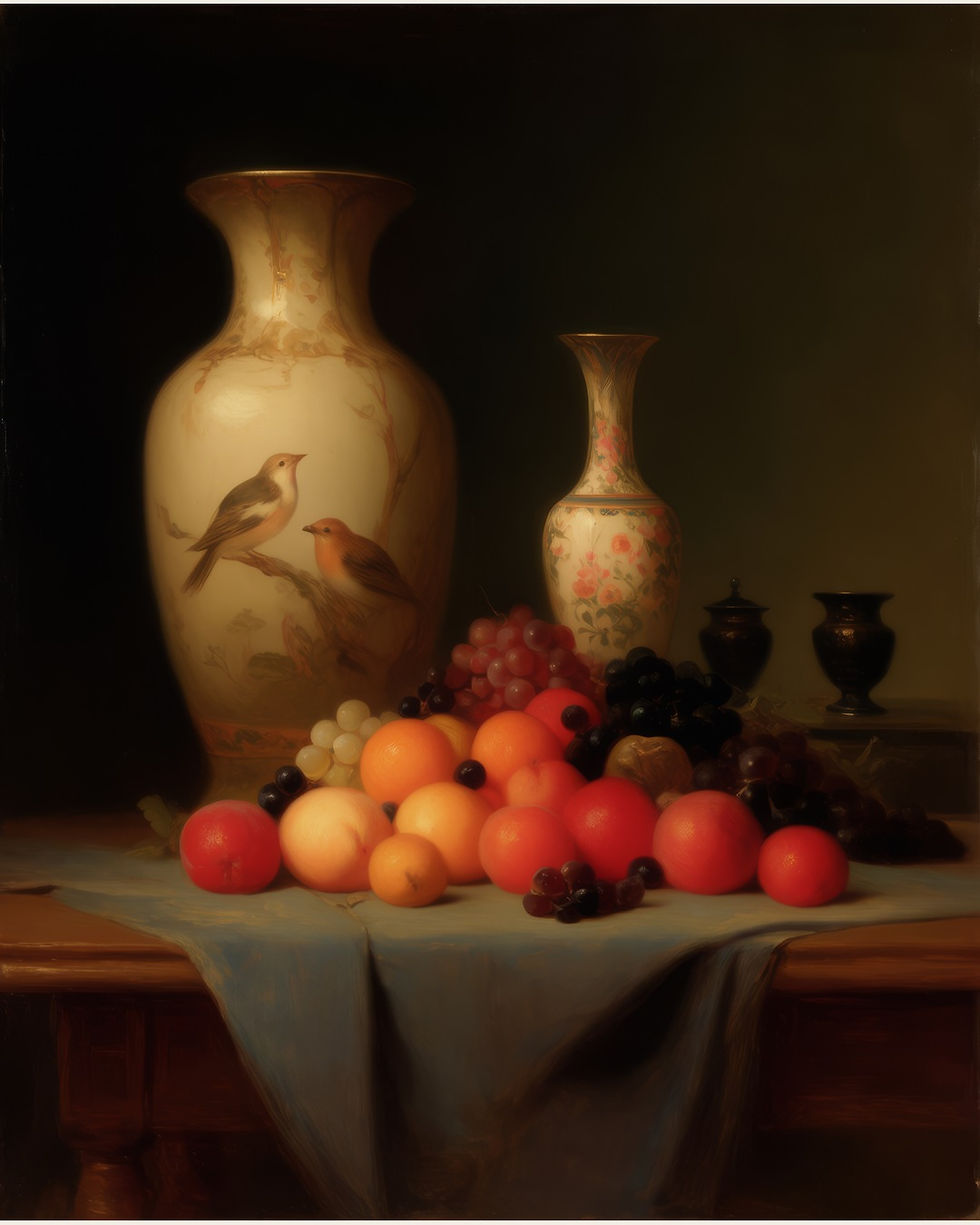
The Birds on the Porcelain Vase. Artwork by Havenest.
In this article
Notice the vase before reading its decoration
The largest vessel provides the composition’s main vertical form. Its pale, warm body stands clearly against the dark wall. The flared opening introduces a broader edge at the top, while the shoulder gives the object much of its volume. These changes in outline would remain readable even if the decorative details disappeared.
That strong silhouette is important because the painting contains many smaller rounded forms below. Fruit gathers across the foreground in yellows, oranges, and reds, with grapes adding clusters of smaller circles. Without a clear larger shape above them, the composition might become a continuous collection of competing details.
Instead, the vase gives the arrangement an order we can understand quickly. Only after that first reading do we need to look at its surface. This sequence is one reason an intricate still life can remain satisfying from more than one distance. Across the room, the pale vessel and warm fruit establish the image. Closer to the frame, the birds become a second invitation. A good placement can allow both encounters, rather than making the work function only as a distant patch of color.

Room mockup: the artwork becomes part of a furnished wall.
The birds create a second scale of attention
The two birds occupy a much smaller world than the fruit and vessels around them. Their bodies follow the curve of the porcelain, and the branch-like decoration gives them a setting within that surface. They do not enter the larger table scene as actual birds. The pleasure comes from recognizing a picture held by an object inside another picture.
Your eye can switch between these levels. See the vase’s rounded body, and the birds become decoration. Attend to the birds, and the porcelain briefly becomes the ground of their own encounter. Neither reading cancels the other. The image holds both at once.
There is no need to identify a species or assign a cultural origin to appreciate this effect. Those would require evidence the visible image does not supply. Begin instead with the birds’ relative position, their warm colors, and the way their shapes sit on the pale vessel. Our guide to reading still-life paintings encourages this distinction between observation and inference. Here, it keeps the smaller scene available for enjoyment without turning an evocative detail into an unsupported historical claim.
A second vase echoes without duplicating
The slimmer vessel to the right repeats the idea of a decorated surface, but at another height and proportion. Its narrow neck and smaller body create a lighter vertical movement beside the substantial main vase. The decoration is present without carrying exactly the same visual emphasis as the birds.
Further right, darker vessels almost merge with the background. Their outlines become apparent more gradually. This reduction in contrast gives the arrangement depth: some objects advance, while others remain partially withheld. The painting does not illuminate everything with equal insistence.
Follow these changes from left to right. A large pale form gives way to a smaller decorated form, then to darker silhouettes. Beneath them, the fruit maintains a more continuous band of warmth. The writing-desk mockup offers a close setting where those differences can be noticed. Its nearby books and decorative objects also make clear why you need not duplicate the vase in your own room. The framed image already contains a collection. A real lamp, a plain bowl, or a book can provide a companion without rebuilding that collection outside the picture.

Writing-desk mockup: a closer setting for looking at the details.
The fruit brings the scene toward us
The foreground fruit uses some of the painting’s clearest warm colors. Red, orange, and yellow forms gather across the table, separated by small shadows and changes in size. Grapes complicate the rhythm with denser groups of smaller rounded shapes. The result is abundant, but the fruit remains visually lower than the upright vessels.
A draped cloth extends from beneath this cluster toward the lower edge. Its darker folds lead downward and add a different sort of shape to the arrangement. The cloth’s comparatively subdued color gives the fruit room to remain vivid, just as the dark wall allows the pale vase to emerge above it.
This relationship can inform a room without becoming a literal decorating formula. Let one area carry the warmer accents while another provides a steadier background. The artwork itself can supply most of the vivid color, especially if the furniture and wall are already restrained. Alternatively, a muted warm textile can echo the fruit while the pale vessel connects to a lampshade or ceramic object. The useful question is where the eye should come forward and where it should be allowed to rest.
Find a wall that supports the smaller story
Because the painting contains both a bold arrangement and delicate decoration, placement depends on which experience matters most to you. Above a sideboard, the vase’s silhouette may be the first thing noticed upon entering. Beside a chair or desk, the birds can become part of a closer, more habitual encounter.
The bedroom mockup shows the framed composition resting on wooden furniture near a lamp. Its dark background gives the pale vase a firm boundary, while bedding and surrounding objects provide softer shapes. This contrast can make the artwork feel collected rather than isolated, provided the furniture still has enough clear space to function.
Test the intended position with a paper outline representing the complete frame. Check it while seated as well as standing, and consider the light you use in the evening. Reflections or a poorly placed lamp can make darker passages harder to see. For the practical decisions between a downloadable artwork and its finished display, consult our guide to framing printable wall art. The listing’s current file information and your own measurements should determine the final scale; the mockups show possibilities rather than specifications.

Bedroom mockup: the artwork shown beside furniture and lamplight.
Pair the painting through structure
A companion artwork need not contain birds or porcelain. Look first at the structure of this composition: a tall pale vessel, a lower cluster of warm shapes, and a dark field around them. A second still life might share the dark ground while arranging its objects horizontally. That change can create a useful rhythm across a wall.
You could also connect the pair through a small repeated color. A warm cream in one work may answer the vase in the other, even if their main subjects differ. This gives the viewer something to recognize without making the pair feel interchangeable. The smaller bird scene remains a discovery specific to this artwork.
The library mockup suggests how the print can sit among deeper wall tones and darker furniture. Its pale vessel preserves a clear focal point, while the fruit adds a lower band of warmth. If building a larger arrangement, begin with a pair and assess their relationship before adding more. Our guide to pairing still-life art offers ways to consider spacing and proportion. Leave enough visual room that someone can stop at one frame and follow its internal story without immediately being pulled elsewhere.
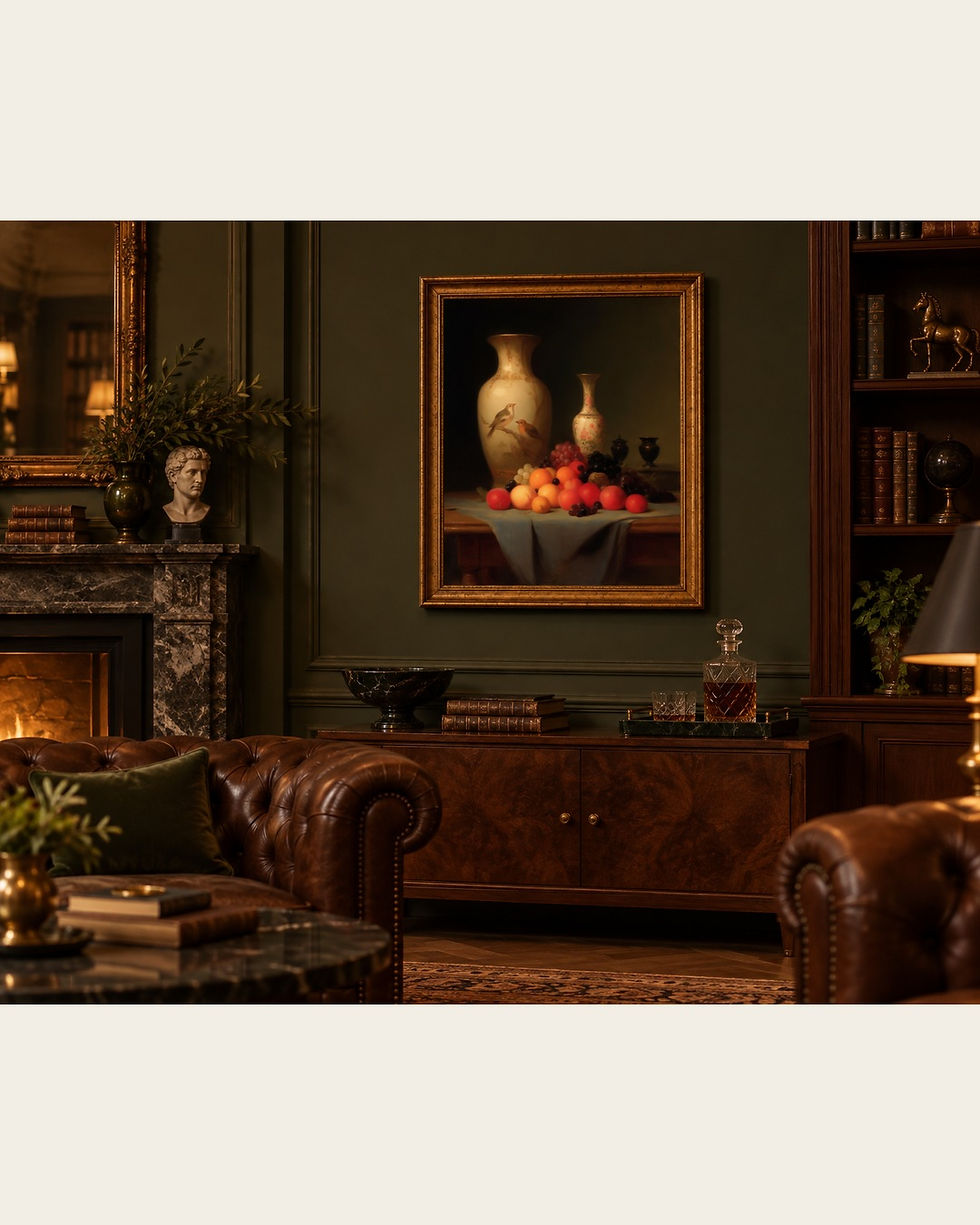
Library mockup: the artwork shown against a deeper interior palette.
Allow the image to be discovered twice
An artwork does not need to reveal all of its interest when someone first enters the room. Here, the large vase and bright fruit provide an immediate welcome. The birds reward the person who stays longer. The dark vessels, patterned surfaces, and folds of cloth offer further places to look after that.
This is a generous quality in a familiar object. Over time, the image can move between background presence and close attention, depending on the day. Sometimes it is a warm arrangement above a desk. Sometimes it is a small meeting between two birds on the side of a vessel. The painting remains the same, but the scale of your attention changes.
If you would enjoy that second story in your own room, explore The Birds on the Porcelain Vase on Etsy. Review the current download details, then consider a frame and placement that leave the decoration approachable. The most fitting spot may be somewhere you already pause: beside a favorite chair, across from a writing desk, or near the table where the day briefly comes to rest.
Written by Havenest Studio


Comments