Floral-Themed Home Decor Ideas for a Calm, Collected Home
Flowers have a way of changing the atmosphere before they change the room. A loose branch in a ceramic vase, a faded botanical print, or a small embroidered cushion can soften clean lines and make a carefully designed interior feel more human. The effect is not about turning every surface into a garden. It is about borrowing nature’s irregular rhythm—its color, movement, and gentle imperfection.
The most enduring floral-themed home decor ideas begin with restraint. Instead of repeating the same blossom across wallpaper, upholstery, and accessories, choose one floral story and let the rest of the room support it. A quiet palette, tactile materials, and generous negative space keep the look elegant rather than overly sweet.
This guide explores how to use floral decor in calm, collected interiors: how to choose a direction, balance pattern scales, anchor the room with wall art, and bring the mood into different spaces without losing the simplicity you love.
In this article
Begin with the feeling, not the flower
Before choosing a print or pattern, decide how you want the room to feel. Florals can be airy and hopeful, romantic and nostalgic, graphic and modern, or dark and botanical. The same rose can feel completely different when painted in pale watercolor, photographed against black, or woven into faded linen.
For a Havenest-style interior, begin with words such as soft, lived-in, luminous, collected, or quietly romantic. These words become a filter. If an object is beautiful but does not support the atmosphere, it does not need to enter the room.
This mood-first approach also prevents floral decor from becoming a temporary trend. You are not decorating around a motif; you are building an emotional palette. The flower is simply the most graceful way to express it.
Choose one floral direction
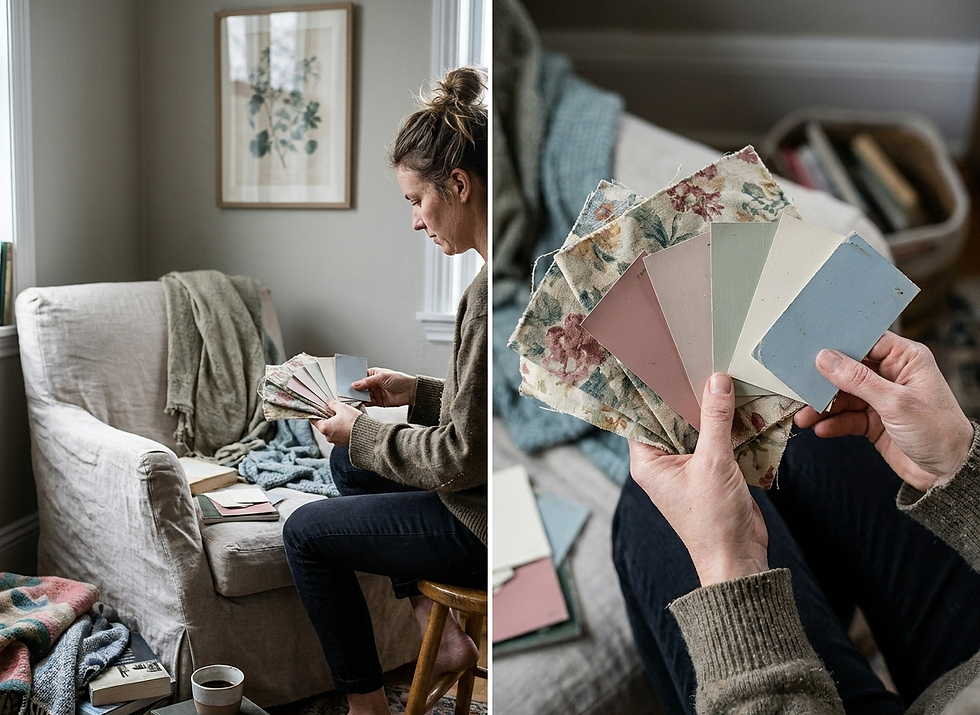
A coherent room usually has one leading floral language. It can include several objects, but they should feel related in age, color, or artistic treatment. Mixing every floral style at once—bold tropical leaves, tiny cottage roses, minimalist line drawings, and dramatic Dutch still lifes—creates noise even when each piece is lovely on its own.
Choose the direction that best suits the architecture and the life already happening in the room:
Meadow florals feel loose and sunlit. They pair naturally with linen, pale wood, woven baskets, and relaxed rooms.
Vintage botanicals bring structure and history. They work beautifully with walnut frames, old books, ceramic vessels, and antique brass.
Romantic garden florals add softness through dusty pink, faded blue, cream, and gentle curves.
Modern abstract florals suit cleaner interiors, especially when the palette is limited and the shapes are oversized.
Moody florals create depth in reading rooms, bedrooms, and dark-academia corners without requiring a dark wall.
Once the direction is clear, repeat it lightly. A botanical artwork might lead the room, while a vase of real branches and one small patterned textile echo the idea. Repetition creates rhythm; restraint keeps the rhythm from becoming a chorus at full volume.
Balance pattern scale and negative space
Pattern scale determines whether floral decor feels restful or restless. If the room already contains many small objects, books, or textured surfaces, a large, open floral composition can bring calm. In a minimalist room with broad plain surfaces, a smaller botanical repeat can add intimacy and detail.
Avoid placing several patterns of equal visual strength beside one another. Let one be the lead, one be the supporting note, and the rest remain quiet. For example, pair a large floral artwork with a tiny embroidered cushion and solid linen curtains—not another large floral rug directly below it.
Negative space is equally important. A flower needs air around it, both in a painting and in a room. Leave clear wall space around framed art, keep the console below it edited, and resist filling every chair with a patterned cushion. The untouched areas make the floral details feel more precious.
Let floral wall art become the anchor
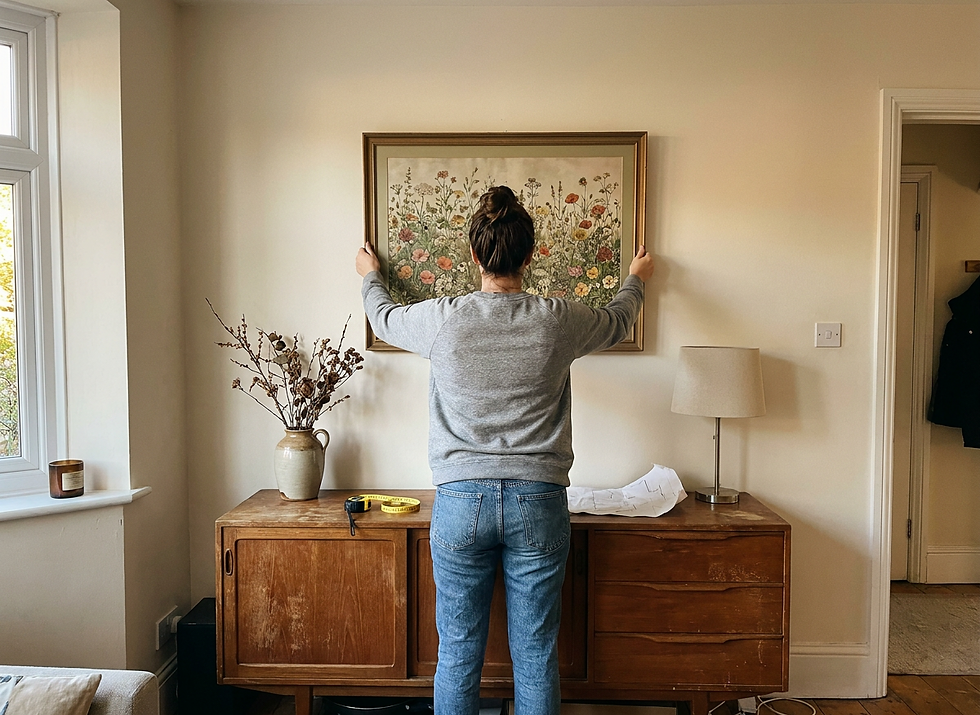
Wall art is often the easiest place to begin because it gives the room a palette without committing every large surface to pattern. A vintage botanical, wildflower meadow, or quiet floral still life can establish color, mood, and a sense of story in one gesture.
Choose scale in relation to the furniture below. Above a sofa, bed, or sideboard, the artwork should feel connected rather than floating. A larger single piece creates serenity; a small coordinated pair adds rhythm; a gallery wall brings a collected feeling when frame finishes and spacing remain consistent.
Frames change the emotional temperature. Light oak keeps meadow florals fresh, walnut gives vintage botanicals warmth, and aged gold adds a quiet old-world glow. Wide cream mats can make smaller prints feel more spacious and refined.
If you enjoy calm wall styling, the Havenest guide to serene wall decor tips offers a practical companion to this floral approach, especially for scale, hanging height, and lighting.
Layer color, texture, and light
A floral room should feel tactile, not merely patterned. Linen, washed cotton, raw silk, warm wood, matte ceramic, and softly aged metal give floral imagery a physical world to belong to. These materials also keep pastel colors from feeling thin or overly delicate.
Begin with a neutral base, then borrow two or three tones from the artwork. A muted meadow print might suggest sage, straw, soft blue, and one small note of rose. Repeat those colors unevenly: more sage in a throw, a whisper of blue in a book spine, and only a touch of rose in fresh flowers.
Light completes the composition. Indirect daylight reveals subtle color, while warm lamps make botanical art feel intimate in the evening. Avoid harsh white bulbs and direct glare on framed prints. The goal is for the flowers to seem part of the room’s weather, changing gently from morning to night.

Use floral decor room by room
Floral decor does not need the same intensity everywhere. Let the function of each room decide how much pattern and color it can comfortably hold.
Living room: Choose one generous floral focal point above the sofa or console. Echo one color in a cushion or vase and keep the larger furniture quiet.
Bedroom: Favor softer contrasts, faded botanicals, and smaller motifs. A single artwork above the bed can feel calmer than a busy feature wall.
Dining area: Use botanical pairs, loose branches, or seasonal flowers. The table already changes daily, so the wall decor can provide steady structure.
Entryway: A small floral print and one natural object create a warm first impression without crowding a narrow space.
Reading corner: Deeper florals, walnut frames, aged brass, and warm lamplight can make a compact corner feel private and enveloping.
Move through the home slowly rather than purchasing a complete matching set. Florals are most convincing when they look gathered over time: one print found for its color, one vase kept for its shape, one textile chosen because it feels good in the hand.


Avoid the details that make florals feel dated
Floral decor becomes dated when everything matches too perfectly or when every surface carries the theme. Matching curtains, cushions, bedding, and wallpaper can flatten the room into a single note. Keep some materials plain so the floral moments have contrast.
Also avoid buying an accessory only because it is flower-shaped. Literal petal lamps, rose handles, floral trays, and blossom ornaments can quickly become costume-like when used together. One sculptural object is charming; an entire bouquet of them is a committee meeting.
Finally, do not ignore the room’s existing character. Modern architecture may need an abstract floral, while a traditional room can hold a detailed botanical or vintage still life. The best choice creates a conversation with the space rather than imposing a theme upon it.
For another way to blend old-world imagery with contemporary rooms, explore vintage decor ideas and wall art in the Havenest journal.
Bring the garden home gently
Floral-themed home decor ideas work best when they leave room for life. A home is not a still photograph: cushions move, flowers fade, books gather, and sunlight changes. The design should become more beautiful through those small shifts, not collapse the moment the table is used.
Begin with one piece that holds the feeling you want—a floral artwork, a linen textile, or a simple branch in a favorite vase. Let it guide the next choice, then pause. A room rarely needs more noise; it needs a clearer melody.
When florals are chosen with restraint, they do more than decorate. They bring softness to hard edges, memory to new spaces, and a quiet sense of season to everyday rooms. The garden does not need to take over the house. It only needs to leave a little light behind.
Find art that feels calm, timeless, and already at home in the Havenest collection.
Words and imagery curated by Havenest.


Comments