Classic Wall Art Inspiration for a Timeless, Collected Home
Some walls ask for decoration. Others ask for a story. Classic art answers the second need with landscapes that open distant horizons, portraits that hold a quiet human presence, still lifes that dignify ordinary objects, and botanical studies that make close observation feel beautiful.
The appeal of classic wall art is not limited to traditional interiors. In a clean modern room, an old-world image can introduce warmth, history, and emotional depth without adding physical clutter. The contrast often makes both the artwork and the furniture feel more considered.
This guide offers classic wall art inspiration for choosing subjects, scale, frames, and placement with intention. The goal is not to recreate a museum or period room. It is to let enduring imagery become part of a home that is contemporary, personal, and genuinely lived in.
In this article
Why classic wall art still feels relevant
Classic art survives changing trends because it speaks through composition, light, gesture, and atmosphere. A misty landscape can still make a busy room exhale. A thoughtful portrait can bring presence to an empty corner. A bowl of fruit painted centuries ago can make a dining room feel more attentive to everyday beauty.
Timeless does not mean neutral or predictable. Classical paintings can be tender, mysterious, humorous, dramatic, or deeply intimate. What makes them useful in interiors is their ability to carry a mood beyond surface fashion. The image continues to offer something after the first glance.
This slow discovery is especially valuable in a home. Decorative objects are often understood immediately, but layered artwork becomes familiar over time. Morning light reveals one color; evening shadow changes another. The piece does not simply complete the room—it begins to keep company with the people who live there.
Choose the subject that belongs in your room
Begin with the emotional role the artwork should play. Do you want the room to feel open, grounded, contemplative, romantic, scholarly, or quietly grand? The subject should support that feeling before it supports a color palette.
Different classic subjects bring distinct kinds of energy:
Landscapes create distance and visual breathing room. They are natural anchors for living rooms, bedrooms, and hallways.
Portraits introduce presence, character, and a sense of story. They work especially well in reading rooms, studies, and intimate corners.
Still lifes add warmth and attention to ordinary rituals. They feel at home in dining rooms, kitchens, and rooms with collected objects.
Botanical studies soften a space while retaining structure. Their precise forms suit both traditional and minimalist interiors.
Architectural drawings and antique sketches bring order, line, and a quieter intellectual mood.
Choose one main category for the room, then allow smaller pieces to widen the story. A landscape can be joined by a botanical study or architectural sketch without feeling random when the tones, frames, or period sensibility relate.
For a broader look at pairing historic imagery with present-day rooms, read Havenest’s vintage decor and wall art guide.
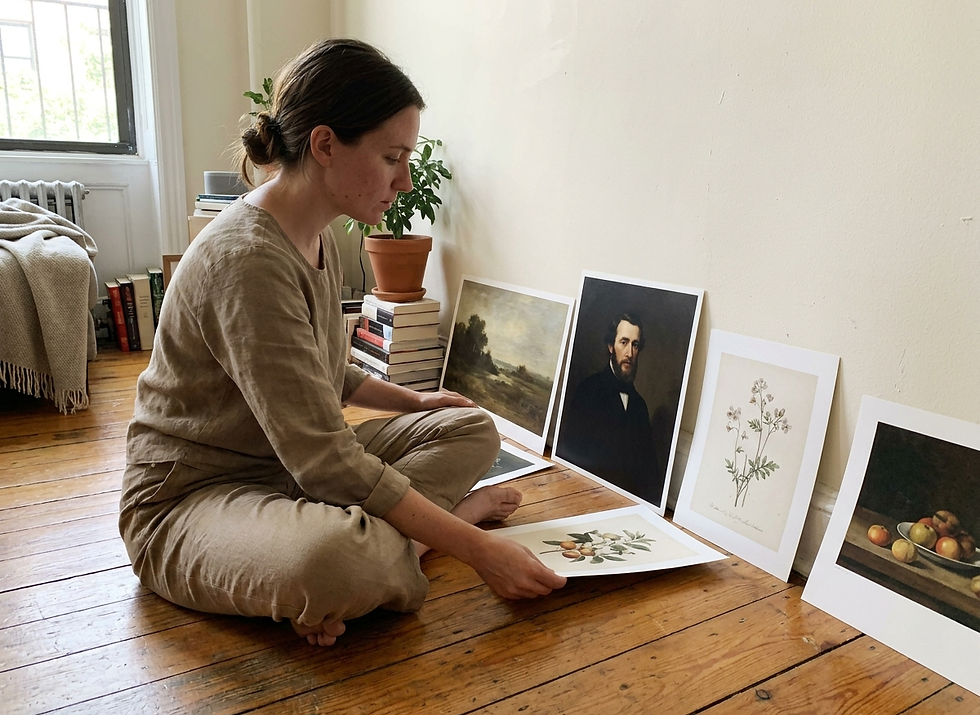
Let scale and placement create calm
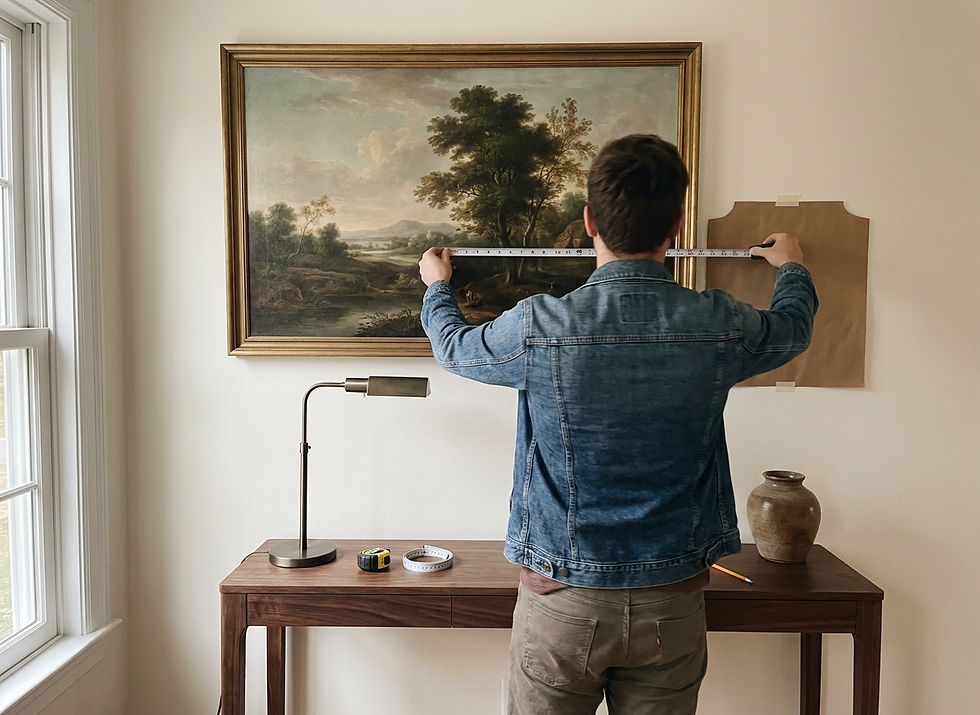
Scale is often the difference between a wall that feels intentional and one that feels unfinished. A small print floating above a wide sofa asks the eye to work too hard. One generous artwork or a coordinated grouping creates a clearer visual relationship with the furniture below.
As a starting point, let art above a sofa, bed, or console occupy roughly two-thirds of the furniture width. This is not a strict rule; architecture, ceiling height, and negative space matter. Tape a paper outline to the wall and view it from the doorway, from a seated position, and from across the room before making holes.
Hanging height should connect the art to daily life. Place the visual center near a comfortable eye level, then consider the furniture below. If the gap is too large, the piece appears to float. If it is too tight, the wall feels compressed.
In hallways and narrow rooms, test the view while moving through the space. In bedrooms, check the artwork from the bed as well as from the entrance. Classic wall art should invite looking, not require a small neck pilgrimage.
Frame classic art with intention
A frame is not merely protection. It decides how the artwork enters the room. Walnut adds warmth and gravity, light oak feels relaxed, aged gold creates a soft old-world glow, and slim black metal gives traditional imagery a sharper contemporary edge.
Match the frame to the room rather than automatically copying the colors inside the artwork. A classical portrait in a clean black frame can look surprisingly modern. A delicate architectural sketch may gain presence from a wide cream mat and walnut surround.
For gallery walls, repeat one element so the collection feels related. You might use the same mat color, keep all frames within warm wood and aged gold, or align the outer edges. Uniformity is not required, but visual rhythm is.
Matte or lightly textured paper usually supports classic imagery better than a high-gloss finish. Non-glare glazing is helpful in bright rooms, while archival materials protect prints you intend to live with for years.

Mix classic art with modern interiors
The most interesting classic interiors are often not traditional from floor to ceiling. They create tension: an old landscape above a sculptural modern console, a formal portrait beside a simple linen chair, or botanical studies arranged over clean contemporary cabinetry.
Let the artwork bring ornament while the furniture provides restraint. If the painting is detailed and richly colored, keep nearby objects simple. If the room is minimal and pale, the artwork can hold deeper contrast without overwhelming the space.
A collected gallery wall can bridge styles beautifully. Combine a portrait, landscape, botanical, still life, and sketch, then unite them through consistent spacing and a limited frame palette. Arrange the composition on the floor first and begin with the largest piece. Build outward slowly instead of filling every remaining gap.
Classic art also benefits from modern lighting. A shaded floor lamp, discreet picture light, or warm wall washer reveals depth without turning the room into a theatrical set. Check reflections after dark and protect works on paper from strong direct sun.
For more practical guidance on spacing, lighting, and visual breathing room, explore these serene wall decor tips.

A room-by-room classic wall art checklist
The room’s purpose should guide the artwork’s subject and intensity. Classic art becomes most convincing when it supports the rituals already happening there.
Living room: Use one landscape, portrait, or balanced grouping as the visual anchor. Give it enough scale to converse with the sofa.
Bedroom: Choose softer landscapes, intimate portraits, or botanical studies with low contrast and restful framing.
Dining room: Still lifes, garden scenes, and small portrait pairs add warmth without competing with the changing table.
Entryway: A single characterful portrait or architectural print creates a memorable welcome in very little space.
Home office or library: Portraits, antique sketches, maps, and architectural studies build a thoughtful, scholarly mood.
Reading corner: One modest artwork, warm wood, and a shaded lamp often feel more intimate than a large gallery wall.
Avoid making every room follow the same formula. A home feels collected when each space has its own emphasis while sharing a few recurring materials, colors, or frame finishes. Repeat the walnut, not necessarily the same painting.

Let the artwork gather meaning over time
The best classic wall art inspiration does not end with a perfectly styled photograph. It begins when the piece enters daily life: when its landscape becomes part of the morning view, when a portrait watches over late-night reading, or when a still life quietly accompanies shared meals.
Choose the image that makes you pause before you explain why. Give it the right scale, a frame that belongs to your home, and enough empty wall to hold its presence. Then allow familiarity to deepen rather than immediately searching for the next object.
A timeless home is not one frozen outside of change. It is a home where beautiful things are given enough time to gather meaning. Classic art does this with rare grace: carrying another age into the present, then becoming part of your own story.
Find art that feels calm, timeless, and already at home in the Havenest collection.
Words and imagery curated by Havenest.


Comments