Where to Print Digital Wall Art: A Gentle Beginner’s Guide
Updated: Jul 1
You have found a piece of art you love. You have downloaded the file. You can already picture it above the sofa, beside the bed, or resting quietly in a reading corner.
Then comes the practical question: where should you print digital wall art?
For many people, this is the moment when printable art begins to feel slightly more complicated than expected. Home printer, local print shop, online printing service, matte paper, fine art paper, canvas, framing, sizing — a quiet, beautiful purchase suddenly turns into a series of decisions.
The good news is that it does not need to feel overwhelming. Printing digital wall art is often much simpler than it seems once you understand the few choices that matter most.
This guide is here to make the process gentler — not technical for the sake of being technical, not complicated for the sake of sounding professional, just a calm introduction to help you print with more confidence.

Start with one simple question: what kind of print do you want to live with?
Before choosing where to print, it helps to think about the final feeling you want. Do you want a smaller print tucked into a quiet corner? A large statement piece above a sofa? A soft framed print in a bedroom? A canvas piece with more presence and texture?
The best place to print your art often depends on the size you want, the material you want, the level of quality you expect, and how much support you want during the process.
There is no single perfect option for everyone. There is only the option that feels most natural for your home, your budget, and the way you like to make decisions.
A beautiful home is rarely built from one grand choice. More often, it is shaped by many small, careful ones.
1. Printing at home
If you already have a good home printer, this can be a lovely place to start. Printing at home works especially well for smaller sizes, quick test prints, art for desks, shelves, and gallery walls, or for anyone who wants to experiment before committing to a large piece.
The benefit of printing at home is simple: control. You can print one version, step back, look at it in your space, and see how it feels. You can test different papers, compare tones, and make decisions slowly. For people who enjoy the process, this can be part of the pleasure.
That said, home printing does have limits. Most home printers are not ideal for oversized wall art. Paper choices may be more limited, and color consistency can vary depending on the printer, the ink, and the settings. For large-format art or a gallery-like finish, professional printing usually gives better results.
Still, for a first try, home printing can be a gentle beginning. It lets you see the artwork become real in your own hands.

2. Printing at a local print shop
For many people, a local print shop is the best all-around choice. It offers something especially valuable: human guidance.
You can bring your digital file, explain the size you want, ask about paper options, and often see samples in person. If you are printing wall art for the first time, this can make the whole process feel much more reassuring.
A good local print shop can help you choose the right print size, check whether the file works well for that size, compare matte paper, fine art paper, or canvas, and sometimes assist with trimming, mounting, or framing.
This is particularly helpful for large wall art. When a piece is going to live above a bed, sofa, console, or dining table, scale matters. A local shop can often catch small issues before they become expensive ones.
Ask simple questions. Request to see paper samples. For a large print, ask whether a small proof is possible. A good printer does not only output the image — they help you bring the piece into the room well.
3. Using an online print service
Online print services are a strong choice when you want convenience and more material options without needing to leave home. Many offer poster prints, fine art paper, canvas prints, framed prints, oversized formats, and preview tools for cropping and sizing.
This can be ideal if you already know what you want and feel comfortable choosing a size and material on your own. The key is to choose with care: read reviews, look for clear descriptions, check file requirements, and make sure the material names actually mean something specific.
A lower price is not always a better choice if the final print feels flat, overly glossy, or less refined than you hoped. When art is something you want to live with every day, it is worth choosing a service that respects the object it is creating.
4. What should you print it on?
Where you print matters, but what you print on matters just as much.
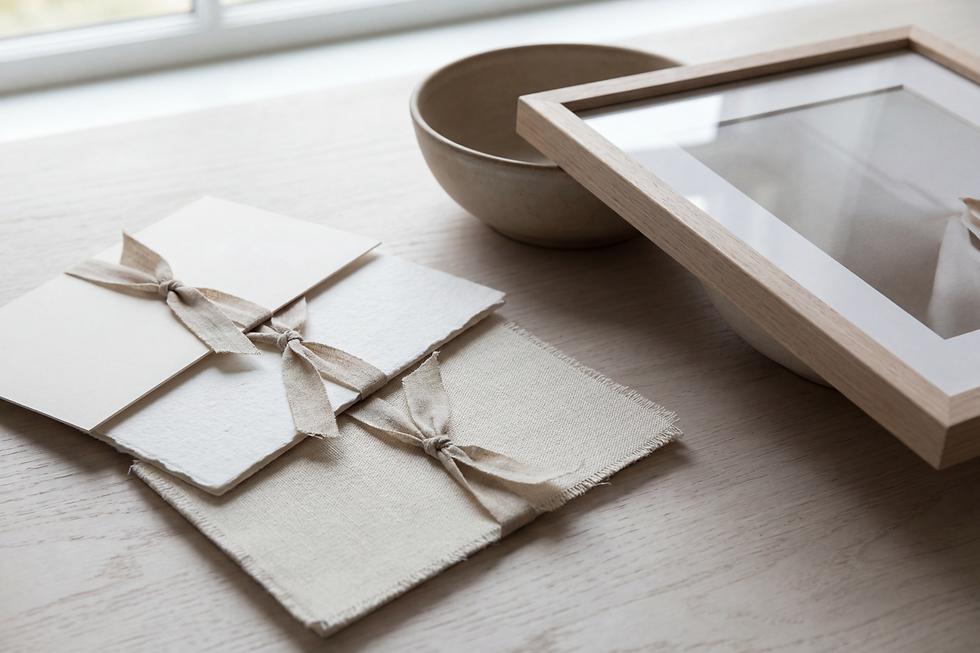
Matte paper is one of the easiest and most versatile choices. It has little to no glare, which makes it especially beautiful in rooms with natural light. Colors tend to feel softer and quieter, which suits bedrooms, living rooms, gallery walls, neutral interiors, and art framed behind glass.
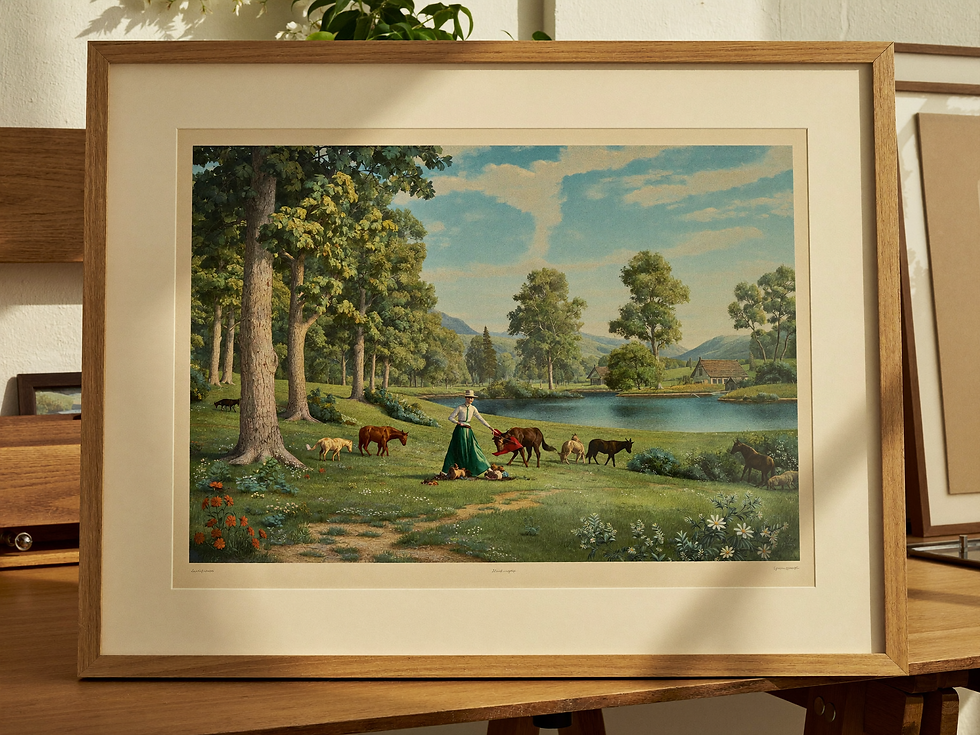
Fine art paper is heavier and often more textured. It feels more tactile, more collected, and more elevated. For painterly landscape art, vintage-inspired pieces, quiet luxury interiors, rustic European spaces, or anyone who loves a gallery-like finish, this can be a beautiful option.
Canvas adds texture and presence. It tends to feel closer to a painting and works especially well at larger sizes. If you want the artwork to hold the wall more confidently, canvas can be a strong choice for above-sofa styling, dining rooms, long hallway walls, and rooms that need a stronger focal point.
The right material does not simply carry the image. It changes how the image lives in the room.

5. A few practical things to check before printing
Before sending your file to print, slow down and check a few essentials: use the largest file included in your download, especially for larger sizes; check the aspect ratio before choosing your frame; ask your printer whether they recommend matte, fine art paper, or canvas; and for oversized prints, consider requesting a proof or test print.
It also helps to remember that screens glow and paper reflects light. Printed color may look slightly different from what you see on your laptop or phone. This is normal, and often part of the charm. Once printed, the artwork becomes less digital and more physical — more connected to the texture, light, and quiet rhythm of your home.
A gentle way to begin
If you are completely new to digital wall art, here is the simplest path: choose one artwork you love, print a smaller version first or start with matte paper, visit a trusted local print shop if you want guidance, move to fine art paper or canvas once you know the feeling you prefer, and frame it in a way that belongs to the room, not just the picture.
That is enough. You do not need to know everything at once. You only need to begin.
Because printable art is not only about getting an image onto paper. It is about letting beauty enter daily life in a way that feels personal, flexible, and quietly your own.

Explore high-resolution printable art from Havenest on Etsy: https://havenest.etsy.com
Please note: Havenest artworks are digital downloads. No physical item will be shipped. Frame, printing service, and styling props are not included.
Words and photographs by Havenest

Comments