Serene Wall Decoration Ideas for a Calm, Beautiful Home
Updated: Aug 7
A calm home is not necessarily an empty one. It is a home where every object has room to be noticed and nothing competes too loudly for attention. The walls play an especially important role because they shape the background of everyday life.
The most effective serene wall decoration ideas do more than fill blank space. They soften visual noise, create gentle focal points, and give the eye somewhere peaceful to rest. With thoughtful art, balanced placement, and a restrained palette, even an ordinary room can begin to feel quietly restorative.
Start with One Quiet Focal Point
Begin with the wall you naturally see first when entering the room. Instead of decorating every surface, choose one artwork that establishes the mood: a misty landscape, a delicate botanical study, a soft abstract, or a scene connected to a place you love. A single confident choice often creates more calm than a collection of unrelated pieces.
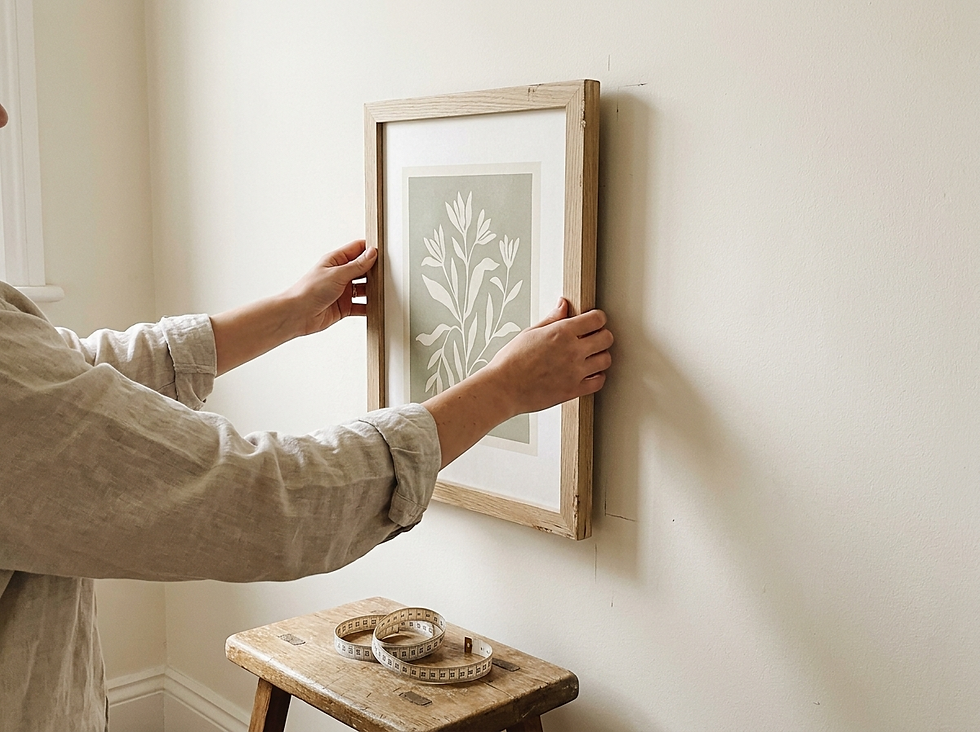
Scale is essential. Above a sofa, bed, or console, the artwork should feel connected to the furniture rather than floating alone. As a simple visual guide, let the art or gallery arrangement occupy roughly two-thirds of the furniture width below it. Hang the center near eye level, then step back and notice whether the composition feels grounded.
Use one large artwork when the room needs a clear visual anchor.
Choose a pair when you want symmetry and gentle rhythm.
Build a small gallery wall only when the pieces share color, subject, or framing.
Leave nearby surfaces simple so the artwork can breathe.
Choose Colors That Let the Room Exhale
Color affects the nervous system before the mind has time to name it. Soft blue can cool a sun-filled room; sage and olive bring the steadiness of nature; warm cream and sand make a space feel held rather than stark.
Look first at the colors already present in your flooring, curtains, upholstery, and natural light. Then select wall art that repeats one or two of those tones. The match does not need to be exact. Slight variation creates depth, while repetition creates a sense that the room belongs together.
Bring Nature Indoors Through Art
Nature-based imagery is one of the most reliable ways to make a wall feel restful. Landscapes extend the visual horizon, botanicals introduce organic movement, and water scenes suggest stillness. These subjects work because they echo forms the eye already recognizes from the natural world.
The frame can reinforce that softness. Light oak feels airy and contemporary, walnut adds warmth, and antique brass brings a subtle romantic note. Matte surfaces usually feel calmer than highly reflective finishes. Whenever possible, place the artwork where daylight reaches it gently without creating glare.
Serene Wall Decoration Ideas for Every Room
Living Room
Choose one generous landscape or an edited group of two or three works. Let the art guide a few small details—a cushion, ceramic vase, or throw—but resist matching every color. A living room feels more natural when the connection is sensed rather than announced.

Bedroom
Use imagery that does not ask too much from the eye: distant hills, quiet gardens, soft florals, or abstract forms with slow movement. Keep contrast gentle and avoid crowding the wall above the bed. The final view should help the room settle, especially in the evening.

Reading Nook and Hallway
A reading corner can hold a more intimate piece positioned close to the chair, creating the feeling of a private visual companion. In a hallway, several small artworks with generous spacing can turn a passage into a calm sequence rather than a forgotten strip of wall.

Layer Texture Without Creating Visual Noise
Serenity does not require flatness. A room becomes warmer when smooth art paper or canvas is balanced with linen, woven fibers, matte ceramic, natural wood, and aged metal. The key is to repeat textures quietly and keep the number of competing finishes under control.
Pair a soft landscape print with linen or washed cotton.
Use wood frames to connect wall art with furniture.
Add one sculptural object rather than many small ornaments.
Choose warm, diffused lighting instead of a harsh spotlight.
If a wall still feels busy, remove one element before adding another. Calm design often emerges through editing. Negative space is not unfinished space; it is the pause that allows every chosen piece to have meaning.
Leave Enough Breathing Room
The temptation to fill an empty wall is understandable, but a peaceful composition needs margins. Allow visible space around each frame, keep gallery-wall gaps consistent, and avoid placing tall decorative objects directly in front of important artwork. The eye should be able to understand the arrangement in a single, easy glance.

Lighting matters too. Warm bulbs and indirect lamps reveal color gradually, while strong overhead light can flatten texture and create glare. In daylight, observe the wall at different hours before deciding on the final position. The most beautiful placement often follows the light already present in the room.
Create a Home That Meets You Softly at the Door
Imagine arriving home with your thoughts still moving quickly. You set down your keys, turn toward the room, and see a quiet landscape resting on the wall. Nothing dramatic happens, yet your breathing slows. The artwork becomes a small threshold between the pace outside and the life you want to protect inside.
That is the deeper purpose of serene wall decor. It is not to create a perfect photograph of a home, but to support the way you hope to feel while living there. Begin with one piece that gives you a genuine sense of ease. Let it guide the palette, spacing, and objects around it, then stop before the room loses its quiet.
If you are searching for artwork with this softer presence, explore the Havenest collection of printable wall art. Choose the image that makes you pause for an extra second—the one that feels less like decoration and more like a memory your home has been waiting to hold.


Comments