Creating a Calm Living Room: The Art of Serene Decor
Updated: Aug 7
A calm living room does not happen by accident. It is shaped slowly, through color, texture, light, negative space, and the quiet emotional pull of the objects we choose to live with. Wall art is one of the most powerful pieces in that atmosphere because it does more than decorate a blank wall. It sets the emotional temperature of the room.
The right artwork can make a living room feel softer, slower, and more grounded. It can evoke the feeling of a meadow at dawn, a countryside path, a misty coastal horizon, or a still landscape that gives the eye somewhere peaceful to rest.

Begin With the Feeling You Want
Before choosing a specific print, it helps to ask: what do I want this room to feel like? Not what style, not what trend, but what emotional quality. A calm living room often carries a feeling of softness, openness, warmth without heaviness, and a kind of visual quiet that lets the mind rest.
Wall art contributes to that feeling in a direct way. A large, bold, high-contrast piece can energize a room but may not calm it. A soft landscape, a muted meadow, or a quiet coastal scene can do the opposite. It can slow the room down. When choosing wall art for a calm living room, consider how the piece makes you feel when you look at it for more than a few seconds. Does it bring rest? Does it feel like a window into a quieter place? That emotional response is the foundation of a good choice.
Choose a Softer Color Palette
Color is one of the fastest ways to shift the mood of a living room. For a calm space, choose artwork with gentle, muted, or nature-led tones. Beautiful colors for a calm living room include warm beige, soft ivory, misty blue, sage green, muted olive, pale gold, dusty rose, weathered brown, and quiet gray.
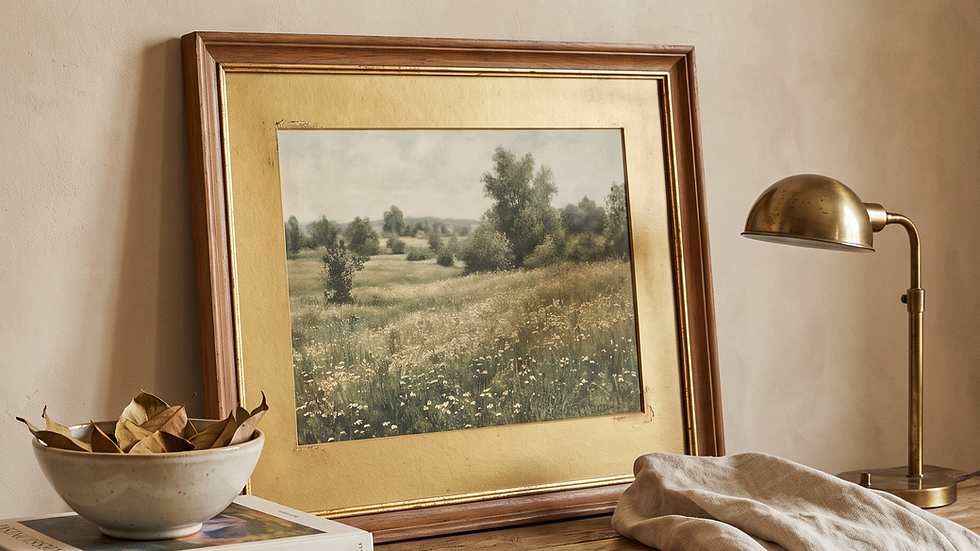
The goal is not to match every color perfectly. In fact, a room often feels more refined when the colors are related rather than identical. A soft landscape with pale greens and warm cream tones can sit beautifully in a neutral living room with linen sofas, wood accents, and ceramic objects. For a quieter look, avoid prints with extreme contrast or overly saturated colors. Instead, choose art that feels softened by time, light, or atmosphere.
Let Scale Create Ease
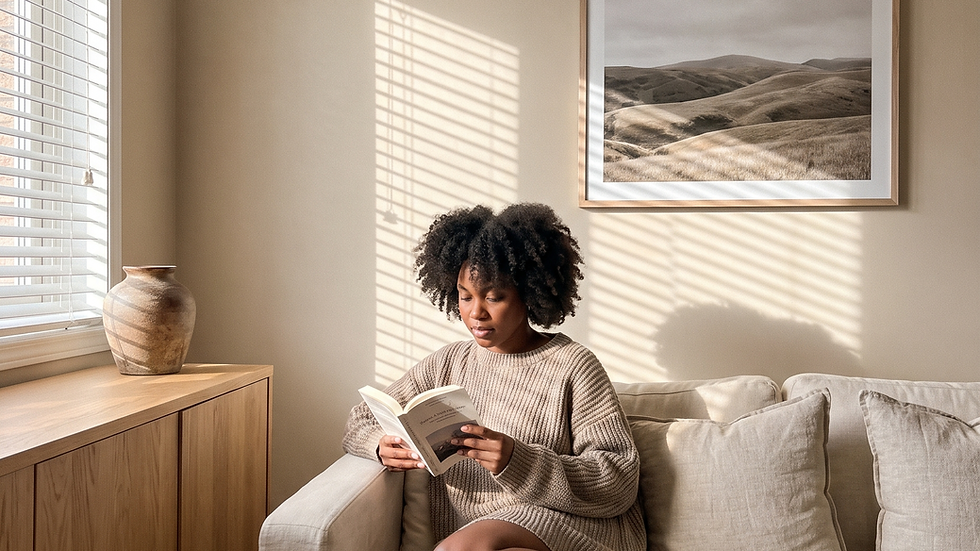
Scale matters. A print that is too small can make a wall feel unfinished, while a piece that is too large and visually heavy can overwhelm the room. For the wall above a sofa, a helpful guideline is to choose artwork that spans roughly two-thirds to three-quarters of the sofa width. This creates balance without making the wall feel crowded.
For a calm living room, large horizontal wall art can work beautifully because it mirrors the shape of a sofa and gently stretches the eye across the room. Horizontal landscapes are especially soothing because they echo natural horizons — fields, hills, beaches, rivers, and skies. If the room is small, one medium-to-large piece may feel calmer than a busy gallery wall.
Look for Gentle Subject Matter
The subject of the artwork matters as much as the color. Certain subjects naturally carry a peaceful energy. For a calm living room, consider vintage landscape prints, countryside paintings, soft coastal artwork, wildflower meadows, pastoral fields, misty hills, quiet gardens, orchard scenes, and still water.
These subjects bring nature indoors in a refined way. They do not demand attention. They create a window-like feeling, as if the room opens into a quieter place. Vintage-inspired art works especially well because it often carries a sense of memory. The softened brushwork, aged palette, and atmospheric detail can make a modern living room feel warmer and more soulful.
Balance the Art With the Room
A calm living room is built through relationship. The artwork should be in conversation with the sofa, rug, curtains, coffee table, lighting, and objects around it. If the room already has many textures — linen, wood, stone, woven baskets, books, ceramics — choose artwork with a quieter composition. If the room is very minimal, artwork with a little more depth and detail can bring warmth.
Pay attention to the frame as well. For printable wall art, framing choices can completely change the final mood. A natural oak frame adds warmth, a thin black frame provides quiet contrast, an antique gold frame creates a vintage feeling, a white mat with a wood frame offers softness, and simple canvas framing gives a gallery-like look. For Havenest printable art, the beauty is that the same file can become many moods depending on how it is printed and framed.
Printable Art as a Flexible Choice
Digital printable wall art is a gentle, flexible way to decorate a calm living room. It allows homeowners to choose the size, paper, frame, and finish that fit their space. They can print locally, use an online print shop, or frame the piece at home. This is especially helpful when designing a living room because scale and proportion can vary from one home to another. A printable file gives more freedom to test what feels right.
For a calm living room, matte paper or fine art paper is usually a beautiful choice. These finishes reduce glare and give the artwork a softer, more tactile quality. Canvas can also work well for vintage landscapes because it adds texture and a painterly feeling. Havenest printable wall art
Final Thoughts
Choosing wall art for a calm living room is less about filling space and more about shaping feeling. The best piece is not always the loudest, newest, or most dramatic. Often, it is the one that gives the room a sense of breath.
A soft landscape can turn a wall into a place of rest. A meadow print can bring light into a corner. A quiet coastal scene can make the room feel more open. A vintage countryside painting can add memory, warmth, and depth.
When the right artwork enters a living room, the space does not simply look more finished. It feels more held.
Words and photograph by Havenest.


Comments