The French Landscape: How Forests, Fields, and Light Became Art
A landscape can be a view, but it can also be a way of feeling. In nineteenth-century France, painters began to make forests, fields, rivers, and weather carry the emotional weight that history painting had once reserved for kings, battles, and myths.
This was not a single, tidy movement. It was a gradual shift in attention: from the ideal landscape arranged in the studio toward the observed landscape, where a bend in a river or a patch of evening light could hold memory, labor, solitude, and change. It belongs to the same larger emotional climate explored in Havenest’s essay on Romanticism.
The artists connected with Barbizon, followed by Daubigny, Pissarro, Monet, and their contemporaries, did more than loosen the brushwork of landscape. They changed what a landscape was allowed to mean. Nature no longer had to be a backdrop for a story. It could be the story.
IN THIS ARTICLE
Before the Forest Became the Subject
At the start of the nineteenth century, landscape still carried the authority of an older tradition. Painters could use mountains, ruins, storms, and distant horizons to create a stage for biblical, classical, or historical drama. Even when the scenery was beautiful, it was often expected to serve a narrative beyond itself.
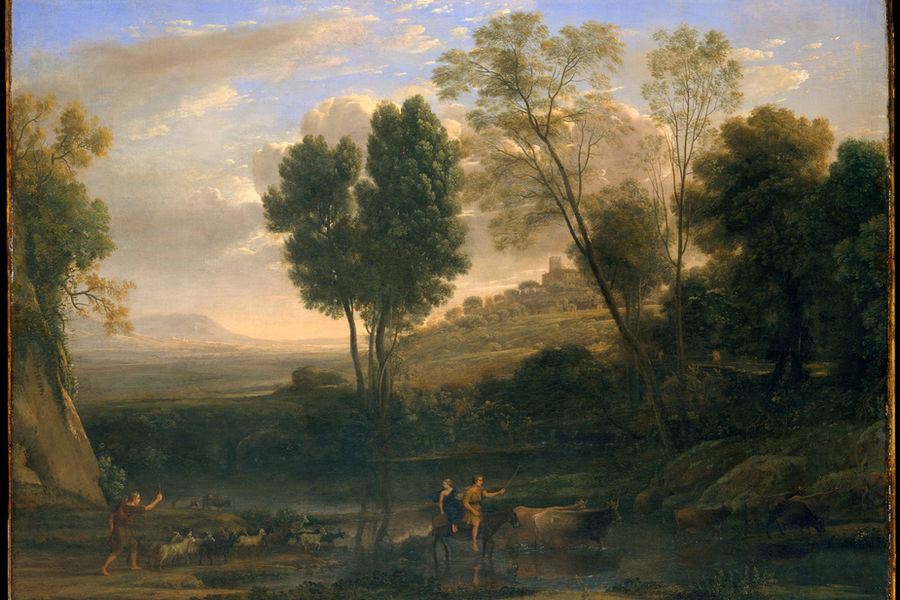
Romanticism unsettled that hierarchy. A storm could become a psychological event. A remote valley could feel like an encounter with the sublime. Yet the most lasting change came when artists began to ask what happened if the landscape did not merely symbolize emotion, but generated it through direct attention: the density of a wood, the dampness of a field, the silence before rain.
The Musée d’Orsay describes the renewed interest in landscape in the early 1830s as a major force in French painting, associated with artists such as Théodore Rousseau and Jean-François Millet. Their importance lies not only in subject matter, but in their willingness to let the physical world become an active presence.
Barbizon: Painting Where the Trees Were
Barbizon was not a formal school with a single manifesto. It was a loose artistic community and a useful art-historical label for painters who worked around the Forest of Fontainebleau, south of Paris. The forest offered something the studio could not easily invent: irregular trees, changing weather, rough paths, local workers, and a landscape whose mood shifted by the hour.
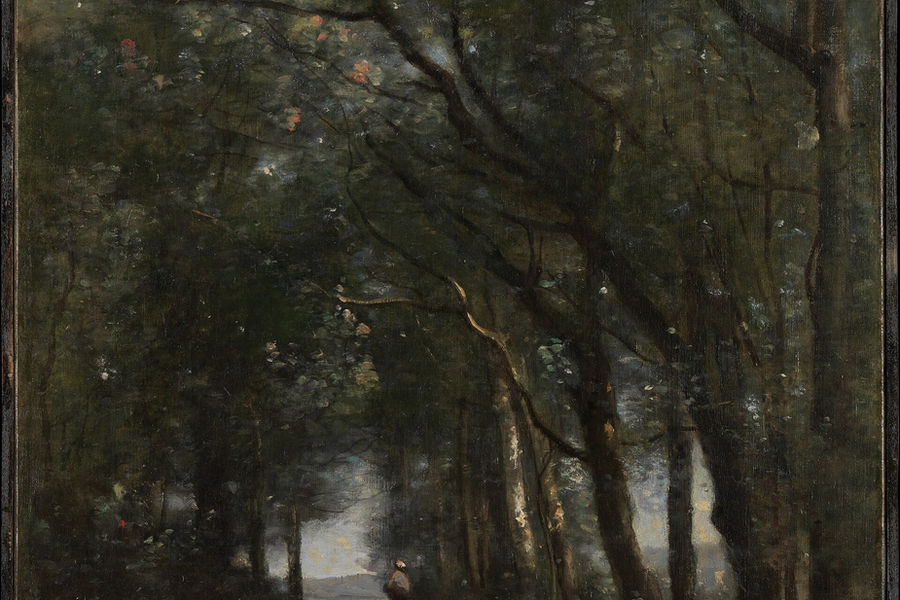
This attention to place did not mean that every Barbizon painter simply copied what was in front of them. Many combined observation with memory and studio construction. What changed was the source of authority. The believable landscape was no longer necessarily the grandest one. It could be a modest clearing, a low horizon, or a road disappearing between trees.
That modesty matters. These paintings bring nature down from the realm of spectacle and closer to lived experience. They ask us to notice the world at the scale of a walk: the tree that interrupts a view, the water that catches light, the field that looks different after a season of work.
Rousseau and the Moral Weight of a Tree
Théodore Rousseau understood that a tree could be both physical and emotional. In his landscapes, trunks and branches are not decorative framing devices. They have age, resistance, and gravity. The forest seems to have its own duration, one that dwarfs the human figure without erasing it.
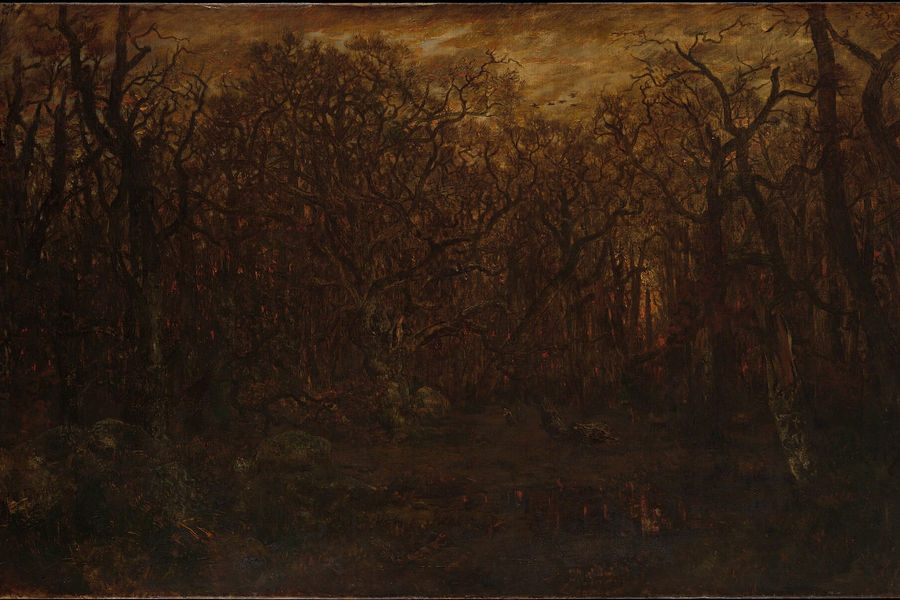
The Metropolitan Museum’s A River in a Meadow, made around 1840, organizes the scene through quiet horizontal bands: meadow, water, trees, and sky. The path and river curve inward, creating a gentle movement through the image. Nothing announces itself as a climax. The drama is in the balance between shelter and openness, between a small human presence and a world that continues beyond the frame.
The Musée d’Orsay’s account of Rousseau’s Avenue in the Forest of l’Isle-Adam adds another dimension: a sustained attempt to observe vertical midday light and to work from the motif itself. This is a form of patience that feels almost ethical. The painter is not conquering nature with a grand idea; he is staying with it long enough for its structure to reveal itself.
That patience is one reason Rousseau’s landscapes still feel contemporary. They do not rush to explain the scene. They let attention become the subject.
Corot: The Landscape Between Memory and Invention
Camille Corot occupies a more elusive place in this story. His landscapes can feel observed, but they are also composed from remembered forms: a river, a tower, a cluster of trees, a distant figure. The result is not a map of one exact location so much as an atmosphere assembled from experience.
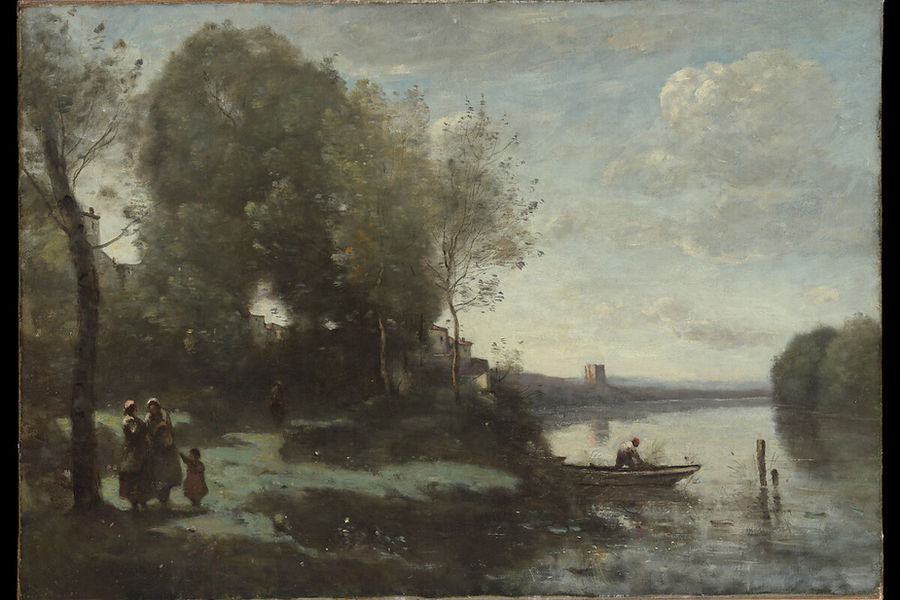
Camille Corot, River with a Distant Tower, 1865, oil on canvas. Image: The Metropolitan Museum of Art, Public Domain.
In River with a Distant Tower, the silvery trees, leaden water, and softened distance create a mood before they create a geography. The tower gives the eye a point of orientation, but it does not resolve the scene. We remain suspended between arrival and recollection.
This is where Corot’s work becomes especially useful for understanding French landscape painting. The movement toward nature did not require artists to abandon imagination. It required them to make imagination answer to the sensory world. A landscape could be invented, but it had to feel lived in: humid, quiet, fleeting, or full of air.
Corot’s restraint also explains why his paintings converse so easily with interiors. They do not demand a single reading. Like a remembered place, they make room for the viewer’s own weather.
Millet: Fields, Labor, and the Human Scale
Jean-François Millet brought a different kind of weight to the French landscape. His fields are not empty spaces waiting for picturesque figures. They are worked environments. The earth has a social history, and the people who move through it are part of its structure.
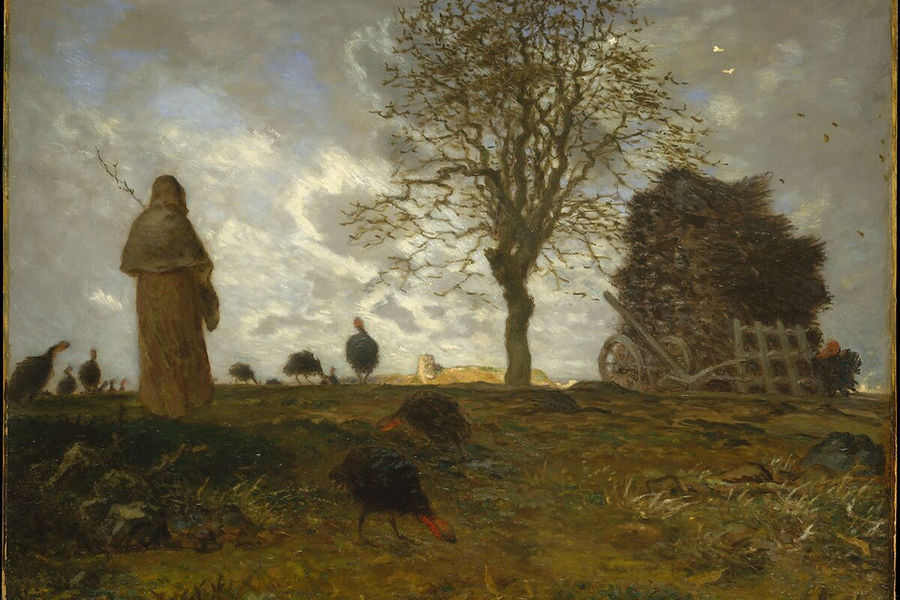
Jean-François Millet, Autumn Landscape with a Flock of Turkeys, 1872–73, oil on canvas. Image: The Metropolitan Museum of Art, Public Domain.
In Autumn Landscape with a Flock of Turkeys, the setting near Barbizon includes the tower of Chailly-en-Bière. The scene is humble: a woman, a flock, a village in the distance, and the broad atmosphere of autumn. Yet the smallness of the activity does not make it insignificant. The painting gives ordinary work a place inside the larger rhythm of the season.
Millet’s approach is not sentimental. The field is beautiful, but it is also a condition of life. This tension is important. Nineteenth-century French landscape painting could offer refuge while quietly reminding us that refuge is built, harvested, and maintained by human hands.
For a modern viewer, that human scale can be deeply grounding. The landscape does not ask us to escape the world completely. It asks us to see the world’s basic textures again: soil, weather, distance, repetition, and care.
Daubigny, Pissarro, and the Road Toward Impressionism
Charles-François Daubigny helped carry this language toward Impressionism. His landscapes give water and sky an unusual freedom. The scene feels less like a carefully sealed composition and more like a moment encountered in motion, where light flickers across a surface before the eye can fully possess it.
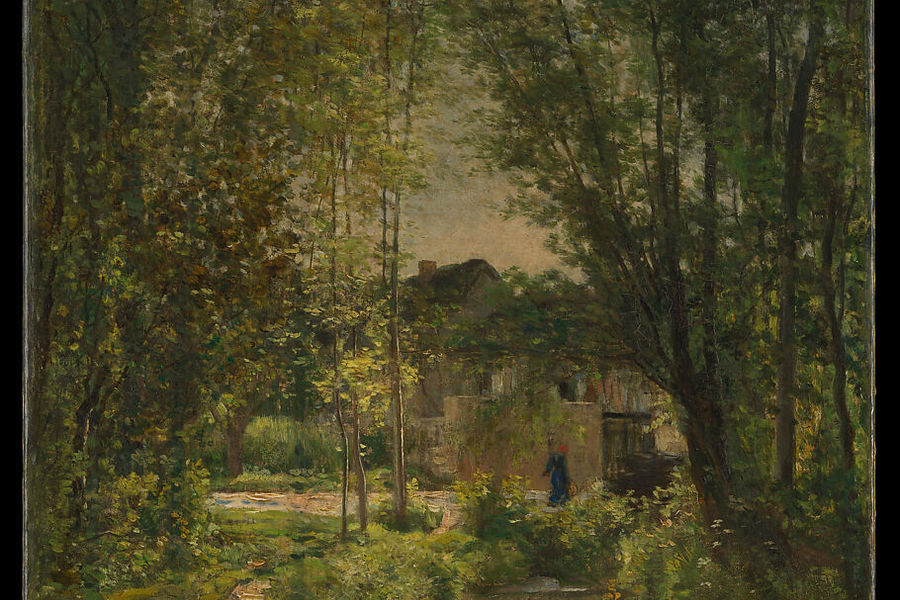
Charles-François Daubigny, Landscape with a Sunlit Stream, ca. 1877, oil on canvas. Image: The Metropolitan Museum of Art, Public Domain.
The Metropolitan Museum notes the importance of Daubigny’s studio-boat and his contact with Camille Pissarro and Claude Monet. In Landscape with a Sunlit Stream, the central water and lightened palette create a bridge between the tonal quiet of Barbizon and the more visibly broken touch of Impressionism.
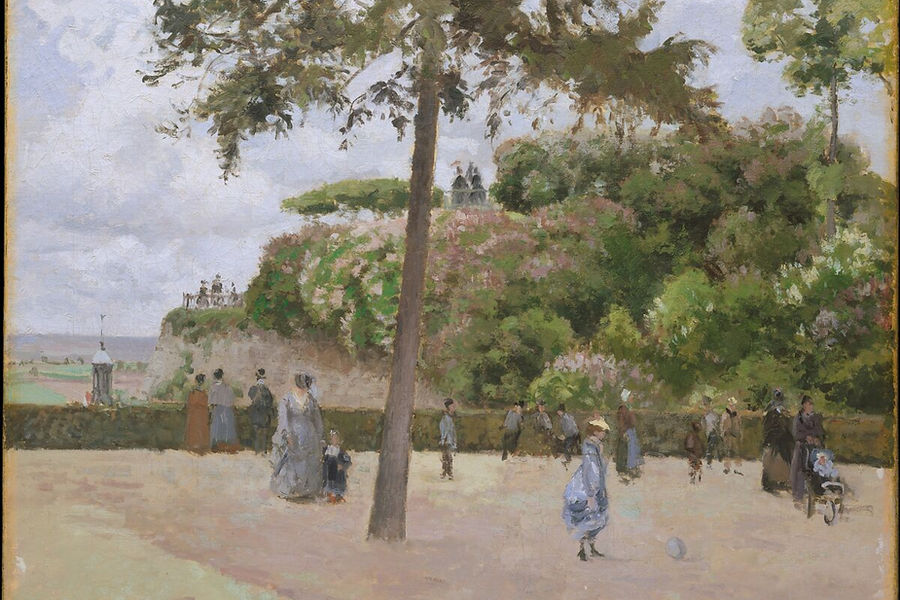
Camille Pissarro, The Public Garden at Pontoise, 1874, oil on canvas. Image: The Metropolitan Museum of Art, Public Domain.
Pissarro makes the shift social as well as visual. The Public Garden at Pontoise includes terraces, trees, children, and bourgeois figures, with a view toward Paris. Nature is no longer an isolated retreat; it is woven into suburban life. The modern landscape includes leisure, movement, architecture, and the changing edges of the city.
Together, Daubigny and Pissarro show why Impressionism did not appear from nowhere. Its portable easels, outdoor observation, and interest in changing light grew from a longer French conversation about how to make painting responsive to place. The brush became freer because the world had become more immediate.
Why These Landscapes Still Belong in Our Rooms
A nineteenth-century French landscape can still feel remarkably at home in a contemporary room because it holds two desires at once. It offers a view outward, toward forests, rivers, fields, and open air. But it also offers a way inward, toward attention, memory, and quiet.
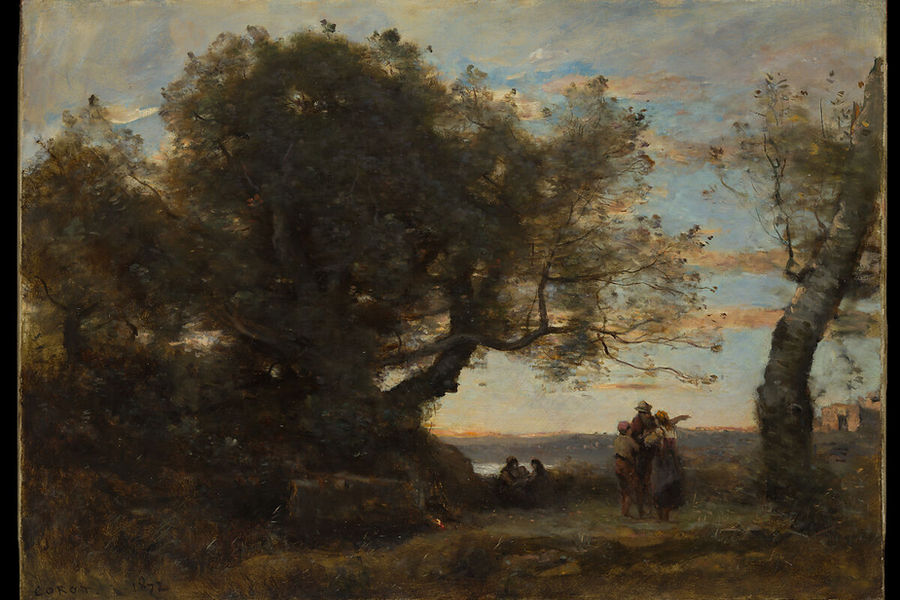
Camille Corot, Landscape with Figures (Les Bohémiens), 1872, oil on canvas. Image: The Metropolitan Museum of Art, Public Domain.
Corot’s Landscape with Figures, painted near the Barbizon landscape, makes that inward quality visible. Trees shelter the figures; a small fire gathers the eye; the sunset turns the scene into a temporary refuge. The painting is not simply about a place. It is about the feeling of being held by a place, even briefly.
That is also why landscape works so naturally alongside the literary and emotional art stories in the Havenest Journal. A quiet field can carry a narrative without illustrating it. A road can suggest a life not yet told. A distant tower can make the present feel connected to somewhere else.
If you would like to continue that conversation, explore Havenest’s Circle of Poets story and return to the Havenest Journal for more art, atmosphere, and ways of living with vintage imagery.
The French landscape tradition does not promise that nature will solve everything. Its quieter promise is more believable: that looking carefully can change the quality of a day. A room with a landscape in it becomes a place where the eye can rest, wander, and remember.
If this kind of landscape gives your room a little more breathing space, you can browse Havenest’s printable art collection on Etsy.
Research Sources
The artwork reproductions in this article were selected from collection records marked Public Domain or Open Access. Please check the individual institution’s current terms when downloading or reusing images outside this article.
The Metropolitan Museum of Art: Open Access
The Metropolitan Museum of Art: Image Resources and Public-Domain Policy
The Metropolitan Museum of Art: Théodore Rousseau, A River in a Meadow
The Metropolitan Museum of Art: Camille Corot, River with a Distant Tower
The Metropolitan Museum of Art: Camille Corot, Landscape with Figures
The Metropolitan Museum of Art: Jean-François Millet, Autumn Landscape with a Flock of Turkeys
The Metropolitan Museum of Art: Charles-François Daubigny, Landscape with a Sunlit Stream
The Metropolitan Museum of Art: Camille Pissarro, The Public Garden at Pontoise
Musée d’Orsay: Paintings collection overview
Musée d’Orsay: Théodore Rousseau, An Avenue, Forest of the Isle-Adam
The Metropolitan Museum of Art: Camille Corot, A Lane through the Trees
The Metropolitan Museum of Art: Théodore Rousseau, The Forest in Winter at Sunset
Comments