
Small Lives, Great Vitality: Qi Baishi and the Poetry of Ordinary Nature
There are paintings that ask us to admire the grand view, and paintings that ask us to stay with what might otherwise escape notice: a shrimp turning in water, a grasshopper resting on a stalk, a cabbage leaf holding the weight of afternoon. Qi Baishi belonged to the second kind. His world is not small because it lacks ambition. It is small because attention has moved close enough to see life flicker.
In Qi’s hands, flowers, insects, vegetables, birds, fish, and household things become more than pleasant motifs. They carry movement, humor, seasonal memory, and the dignity of ordinary existence. The subject is familiar, but the act of looking is never casual.
The dignity of small subjects
Qi Baishi’s attraction to common life was inseparable from his beginnings. The Spencer Museum of Art’s note on Flowers and Insects describes him as a self-made artist from a poor family whose humble origins shaped the rustic quality and ingenuousness of his paintings. He returned repeatedly to plants, insects, fish, shrimp, and crabs—not as picturesque symbols, but as living presences with their own character.
That choice quietly changes the hierarchy of a picture. A peony may be sumptuous, but a small insect can be just as important. A vegetable is not merely an object on a table; it is a record of soil, labor, weather, and appetite. The painting gives it a stage. Vitality is not reserved for the spectacular.
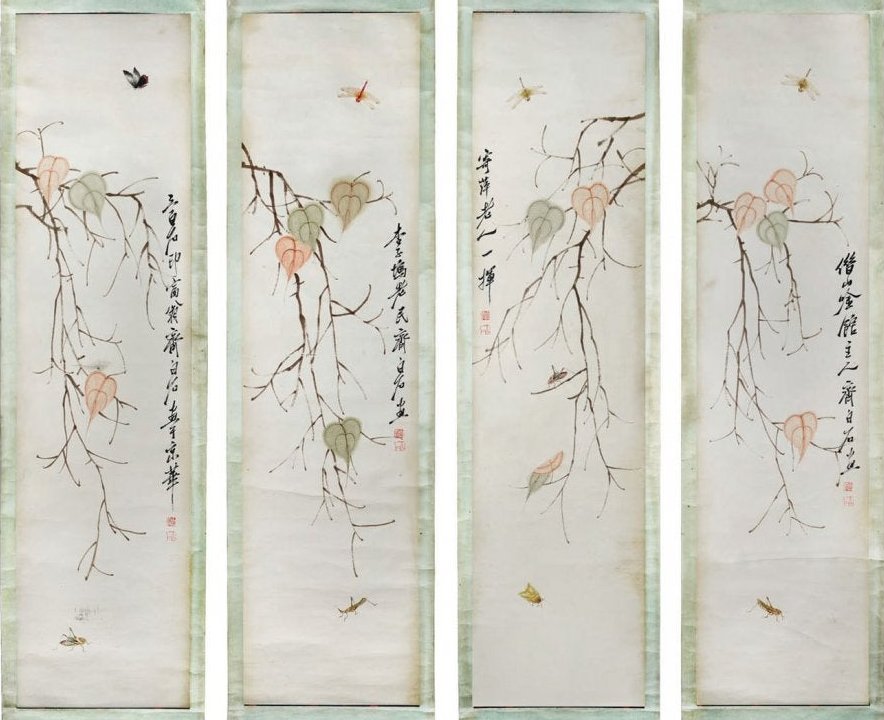
Qi Baishi, Leaves and Insects, ink and color on paper. Wikimedia Commons.View the source file
Gongbi and xieyi as different kinds of looking
One pleasure of Qi’s flower-and-insect paintings is the tension between two kinds of mark-making. The insects may be described with extraordinary precision: fine antennae, articulated legs, patterned wings, a body held in alert suspension. Plants and vegetables, by contrast, arrive through broader strokes, washes of color, and forms that feel both deliberate and alive.
It is useful to use the Chinese terms gongbi and xieyi here, without treating them as rigid boxes. Gongbi points toward meticulous, controlled description; xieyi, often translated as “writing the idea,” suggests a more expressive and abbreviated approach. Qi lets the two attitudes share one sheet. The insect is not there to prove botanical accuracy, and the flower is not merely a soft background. Each kind of brushwork gives the other its force.
The Met’s record for Insects and Plants makes this contrast especially clear. The album, dated 1943, brings together insects rendered in a meticulous fine-line manner with flowers and vegetables painted in a colorful, freely sketched style. Visually, it feels like a conversation between concentration and release.
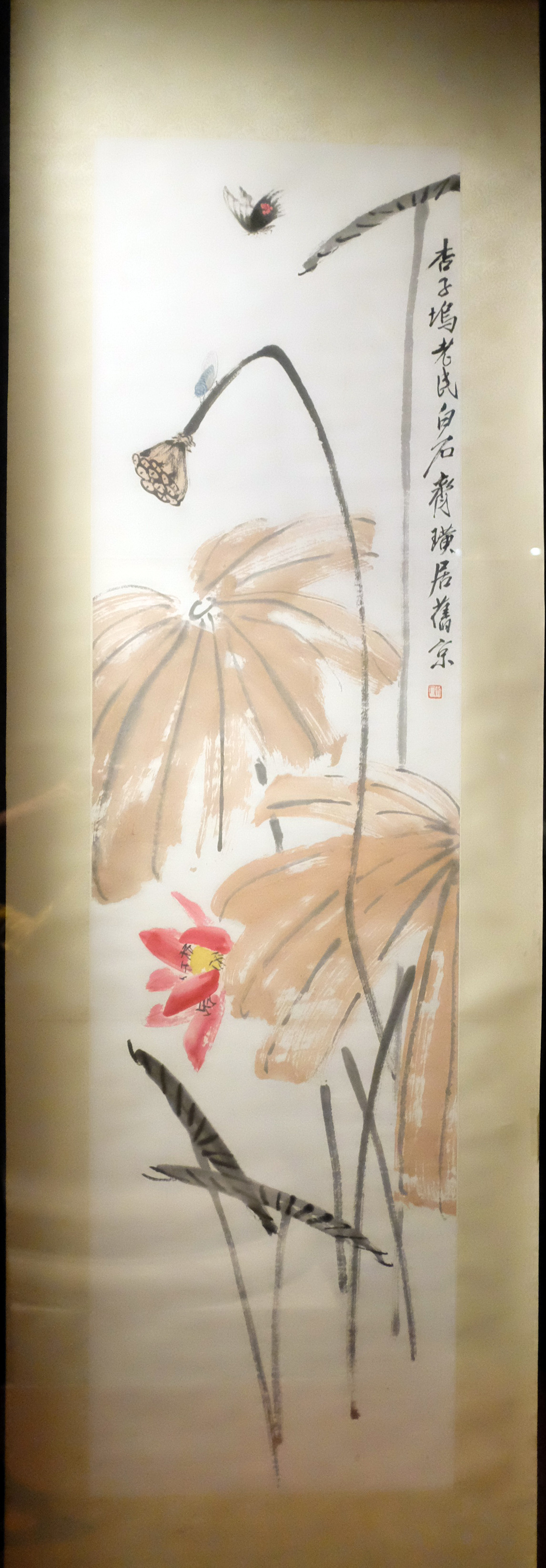
Qi Baishi, Lotus and Insects, ink and color on paper. Wikimedia Commons.View the source file
Gesture, empty space, and the life of the brush
Qi’s paintings often look simple only after the decisions have been made. A few dark leaves, a red flower, and one small creature may occupy a page, but the white paper around them is active. It slows the eye, separates one gesture from the next, and gives the insect room to exist without being swallowed by the composition.
The Kyoto National Museum’s account of Qi’s insect paintings emphasizes the precision of his observations—the antennae, legs, and wings—and the importance of empty space in placing tiny creatures on the page. The museum’s exhibition text helps explain why a small insect can hold so much visual weight.
This is also where calligraphy, seals, and brush rhythm enter the experience. The painting is not only an image of a creature. It is a field of pauses, pressure, tempo, and interruption. A stroke can suggest a leaf without outlining every edge; a tiny adjustment can make a shrimp appear to turn in water. Qi’s economy is a practiced understanding of how much a mark can carry.
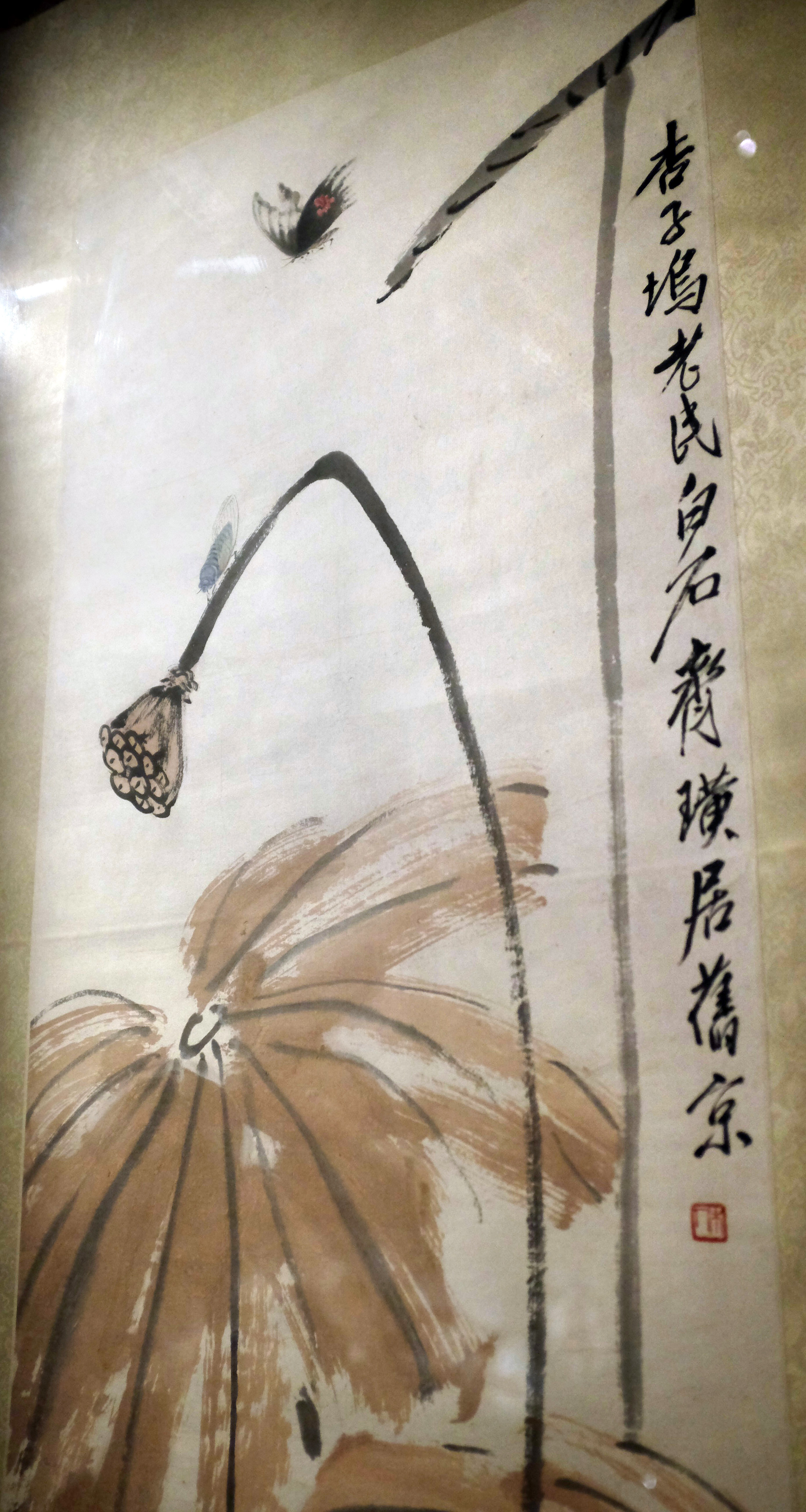
Qi Baishi, Lotus and Insects, ink and color on paper. Wikimedia Commons.View the source file
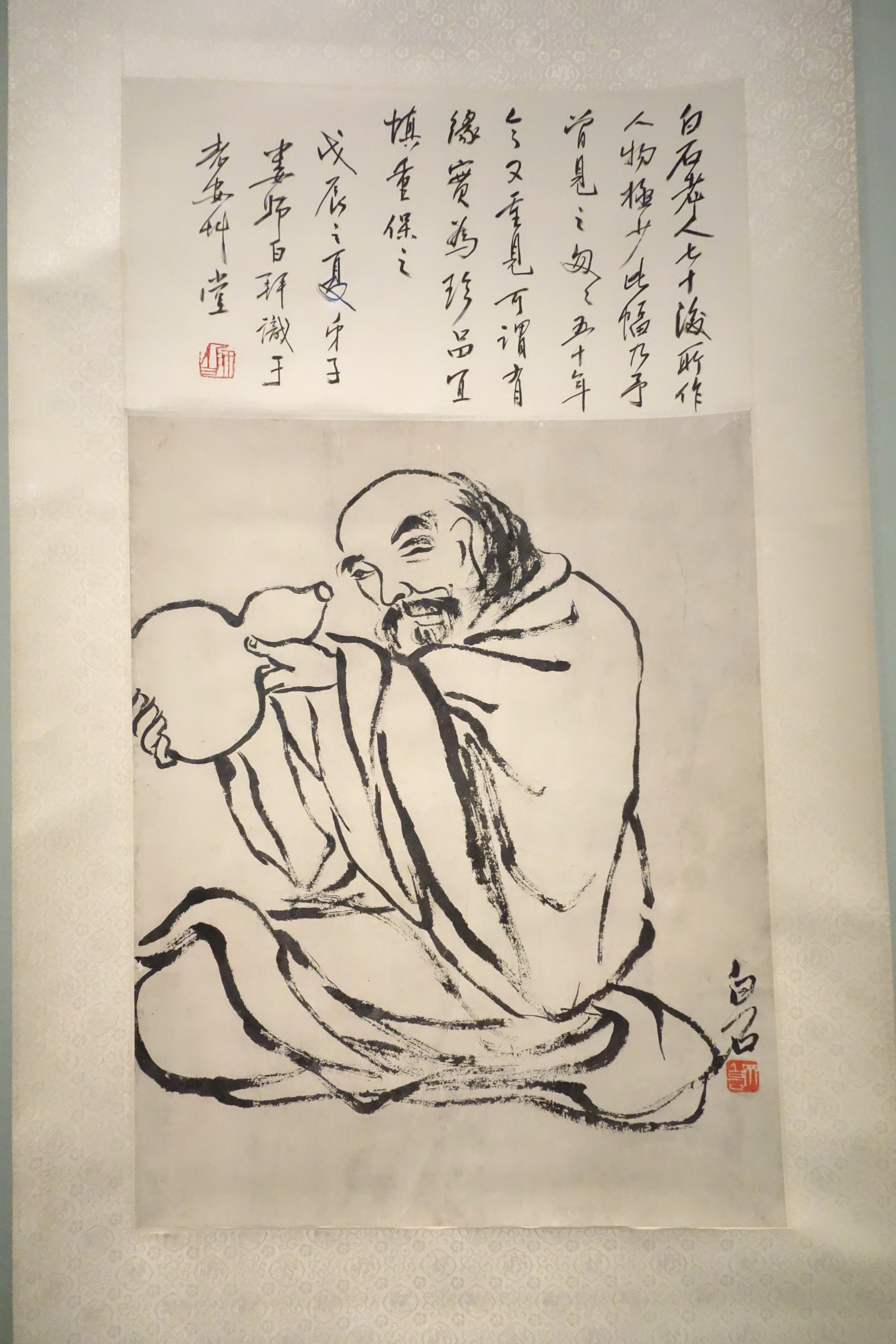
Qi Baishi, Old Man Looking into a Gourd, ink on paper. Wikimedia Commons.View the source file
Rural memory and seasonal objects
The Met notes that Qi drew inspiration from the humble flowers, vegetables, and creatures he had observed as a boy, and that the album matches insects with objects as a visual chronicle of seasonal markers in rural life. The paintings do not narrate one event. They accumulate the repeated knowledge of seasons: what appears, what ripens, what moves through the grass, what returns.
A cabbage or lotus leaf therefore carries more than shape and color. It carries touch and temperature. It suggests a world before it has been arranged for display. Even when Qi’s compositions are witty, they are not cynical. Their humor comes from recognizing that the living world is full of small drama: a creature pauses, a bird watches, a stem bends, a vegetable becomes vivid against ink.
From brushwork to presence
Qi Baishi’s paintings are often described through their subjects, but their deeper subject is presence. The insect is convincing not because it is rendered like a scientific plate, and the flower is moving not because it has been made conventionally beautiful. They feel present because every element has been given a precise degree of attention.
That attention can be felt in the 1948 Flowers and Insects at the Spencer Museum. Ink and color on paper hold the work between description and improvisation. The vertical format lets the eye travel, pause, and return. Several small lives share the same atmosphere.
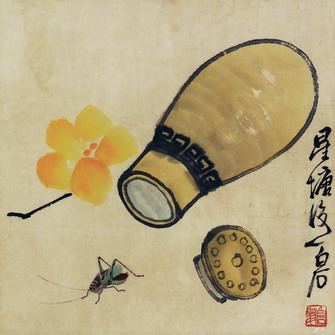
Qi Baishi, Cricket Gourd, ink and color on paper. Wikimedia Commons.View the source file
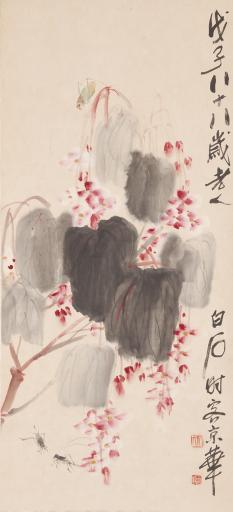
Qi Baishi, Flowers and Insects, 1948, ink and color on paper. Spencer Museum of Art.View the source file
Bringing Eastern botanical art into a contemporary home
Qi Baishi’s work can live beautifully in a contemporary interior, but it deserves more than the vague label of “Zen décor.” Its calm comes from alertness, not emptiness. The paintings are full of color, wit, asymmetry, and the evidence of a hand making decisions. Rice-paper texture, warm walnut, ceramic, and generous wall space can support that sensibility without turning it into a lifestyle cliché.
The most compelling lesson for a home may be the balance between detail and rest. One expressive botanical print can hold a room’s attention without crowding it. The open ground around the subject creates a quiet that leaves the imagination room to move.
Qi Baishi belongs in a conversation about modern wall art because he shows how a small subject can create a large emotional field, and how a painting can be lively without becoming loud. For the wider relationship between stillness, nature, and the home, continue with The Painters Who Made Stillness Visible or How to Choose Wall Art for a Calm Living Room.
Research sources
Written by Alex, Holland, and Louis from Havenest Studio.
Comments